
Key Takeaways
-
Identify lipedema as a chronic, progressive fat disorder resulting in disproportional, bilateral limb swelling, tenderness, and bruising that is commonly misdiagnosed as obesity or lymphedema. Early recognition enhances outcomes and reduces progression.
-
Use a structured diagnostic path starting with self-assessment and detailed medical history, followed by clinical examination and targeted imaging such as ultrasound or MRI to confirm the diagnosis.
-
Bring clear documentation to clinicians, including symptom timelines, photos, family history, limb measurements, and food or exercise response, to make the most compelling case possible for a specialist work-up.
-
Find a multidisciplinary care team with lipedema expertise, such as vascular or lipedema specialists and lymphedema therapists, and be sure to ask questions about diagnostic criteria and treatment risks and benefits.
-
Addressing mental health and community resources as part of care by leveraging therapy, support groups, patient registries and advocacy to navigate emotional impact and enhance long-term coping.
-
Treatment: Stick to ongoing management such as compression, lymphatic drainage, personalized exercise and nutrition. Consider advanced surgical options when appropriate. Stay informed on research and get regular reassessments.
By tracing a clear path of symptom tracking, clinical evaluation and specialist referral, lipedema presents as symmetrical leg or arm fat, pain on touch, bruising easily and no effect from diet.
A diagnosis depends on medical history, physical examination and excluding other causes such as lymphedema.
Find a clinician with experience in adipose disorders and bring photos, measurements and treatment goals to the appointment.
Understanding Lipedema
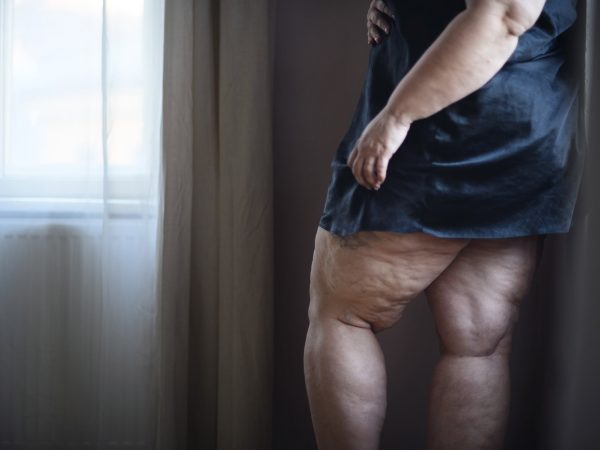
Lipedema is a long-term, degenerative condition characterized by disproportionate, uncomfortable fat accumulation that primarily impacts the legs and occasionally the arms. It is not easy obesity. It typically starts or exacerbates around hormonal changes like puberty, pregnancy, or menopause, and there is frequently a familial connection.
It is categorized into five types based on fat distribution, and most sufferers experience symptoms for years prior to receiving an accurate diagnosis.
The Signs
-
Symmetrical swelling of both legs, often sparing the feet, with sharp demarcation at the ankle.
-
Fat that won’t go away when you diet, exercise, or cut calories.
-
Easy, unexplained bruising on affected areas.
-
Waxy, thin, flabby skin over the fat, occasionally with nodules.
-
Pain or tenderness of the subcutaneous tissue.
-
Disproportion between upper body and lower body size.
-
Common experiences include a limited range of motion surrounding the hips, knees, or ankles.
Notice swelling that remains even with weight loss. If one uses calorie control and increased activity but the lower body remains enlarged, lipedema is more likely than simple obesity.
Observe where your skin is thin and bruises arise after light knocks. That is the pattern which separates lipedema from alternate causes.
The Feel
Affected limbs typically feel heavy and achy, with an ongoing soreness that can disrupt day-to-day activities. Pressure on the tissue typically induces pain, and patients report an unusual tenderness to palpation that is distinct from normal adipose.
Others say the skin feels cooler in the afflicted region compared to the rest of the body. Emotional effects are common. The change in shape, chronic pain, and limits on mobility can lead to distress, reduced social activity, and work difficulties.
Sensitivity can be focal—small nodules hurt when pressed—while larger areas produce a dull, constant ache. Fatigue stems from both the physical weight and sleep disruption from pain. These subjective symptoms are crucial to note on intake forms and clinical exams.
The Progression
Lipedema usually progresses in stages. Stage 1 is characterized by soft swelling and subtle tissue transformation. Mid stages have more noticeable fat nodules and increased tissue firmness.
Late stage introduces fibrosis, massive brawny folds of overhanging fat pads, significant limb enlargement, and even potential loss of mobility. Over the years, fat deposits increase and tissue edema may occur.
A few patients advance to lipo-lymphedema where lymphatic dysfunction worsens swelling. Secondary complications may involve skin lesions, frequent bruising, and joint strain.
Ultrasound or MRI can be used when clinical signs are ambiguous. Imaging can demonstrate the adipose distribution pattern and can help exclude lymphedema.
Conservative care, including compression, manual therapy, diet like Mediterranean-style eating, and exercise, should be attempted prior to surgery. Surgery is still the only means of removing lipedema fat and avoiding significant mechanical disability.
The Diagnostic Journey
A well-defined path enhances your chances of a correct lipedema diagnosis. Begin with symptoms, proceed to patient history and physical exam, then employ focused testing to eliminate mimics. Early diagnosis restricts you from moving through the clinical stages we described and enhances treatment options.
1. Self-Assessment
Lipedema symptom checklist and rate each one. Note tissue tenderness, tightness, easy bruising and if symptoms exacerbate later in the day. Create a table of involved areas, symmetry, spared hands and feet, and tissue resistance to weight loss.
Note family history, as lipedema is often hereditary and typically presents itself during hormonal changes like puberty, pregnancy or menopause. Record limb size over weeks and months using measurements and photos.
Record activity throughout the day with a steps app and observe whether symptoms fluctuate with activity level. This documentation allows physicians to benchmark the patient’s account against diagnostic standards and a suspected 10% incidence in females highlights why diligent self-screening is important.
2. Physician Consultation
Arrive with a concise list of symptoms, previous diets or weight loss attempts, and pertinent family history. Document with photos the progress and times of day when symptoms fluctuate.
Request that your clinician use established diagnostic criteria and consider comorbidities. Request referrals to specialists when needed, such as lipedema-aware physicians, vascular doctors, or lymphedema therapists.
Be specific about what you can do functionally and what your activity level is on a day-to-day basis. Clinicians might not realize lipedema’s high rate of misdiagnosis, so informed patients help keep the visit centered.
3. Clinical Examination
Anticipate a physical exam that examines fat distribution, lumps, and whether the tissue feels soft, lumpy, or fibrotic. The doctor will measure arm and leg circumference and tissue thickness and check for skin changes or fibroma.
Functional tests evaluate pain, range of motion, and how limb performance varies throughout the day. Patients tend to note that their pain improves with elevation or activity, and sensory testing often identifies relative insensitivity to pressure in the involved regions.
These symptoms constitute the primary clinical cluster upon which to base a diagnosis.
4. Differential Diagnosis
Clinicians must rule out primary or secondary lymphedema, venous disease, morbid obesity, lipodystrophy, and symmetric lipomatosis. Use venous Doppler to evaluate venous insufficiency and consider lymphatic studies when lymphedema is suspected.
Create a comparative table listing overlapping and unique features: onset, symmetry, sparing of hands and feet, tendency to bruise, and response to weight loss. Imaging is primarily to exclude other causes rather than to confirm lipedema.
5. Confirmatory Tests
Noninvasive imaging, including ultrasound, MRI, or CT, can see subcutaneous fat patterns. Lymphoscintigraphy or MR lymphangiography evaluate lymph transport if lymphedema is a concern.
Labs may look for inflammation or lipid abnormalities. Genetic testing remains limited. Match everything up with the clinical picture to make a consistent diagnosis.
Diagnostic uncertainty persists, so synthesize history, exam, and judicious testing.
Differentiating Conditions
Distinguishing lipedema from other reasons for fat alteration or swelling is critical to receiving the proper treatment. A clinical exam with careful palpation, history of self and family, and consideration of pattern, texture and symptoms generally provides the diagnosis. Specialized tests assist solely to exclude alternative causes and aren’t regular.
These are the fundamental distinctions doctors apply and the actionable indicators patients can observe.
Lipedema vs. Obesity
Diet and exercise won’t get rid of lipedema fat. The patients complained of limb swelling that persisted despite attempts at weight loss. Obesity generally diminishes with calorie restriction and exercise.
Lipedema presents with symmetrical swelling of the limbs that typically spares the feet. In obesity, the additional fat is more generalized and involves the trunk and limbs together. This feet limb-sparing is a nice practical bedside clue.
Pain, effortless bruising and tenderness to touch are hallmarks of lipedema. These symptoms are uncommon in uncomplicated obesity, where tissue is tender or hematoma occurs without obvious cause. Lipedema typically starts during periods of hormonal fluctuation like puberty, pregnancy or menopause.
Metabolic abnormalities such as hypertension, hyperglycemia, and dyslipidemia frequently coexisted with obesity. Lipedema patients are often free of these metabolic syndrome indicators, despite large limbs. A family history of similar limb changes favors lipedema.
Lipedema vs. Lymphedema
Lymphedema frequently starts unilateral and generally affects the feet. Lipedema is usually symmetrical and avoids the feet, which distinguishes them clinically.
On palpation, lipedema is soft and nodular. Lymphedema is generally firmer and fibrotic as it ages. Skin thickening and hyperkeratosis are characteristic of late-stage lymphedema but rare in ‘pure’ lipedema.
Stage 1 lipedema can have mild, end-of-the-day ankle or foot swelling that resolves with elevation or sleep. Gravity-related fluid shifts from extended standing can simulate this but resolve predictably. Lymphedema fluid doesn’t clear with elevation and frequently exhibits pitting initially, then nonpitting with fibrosis.
Imaging and lymphatic studies can help elucidate lymph transport and fluid patterns when the exam is ambiguous. They are helpful to differentiate lipo-lymphedema when tissue overgrowth and lymph failure coexist, but they are confirmatory rather than diagnostic.
Key practical point: Diagnosis usually requires time and clinical judgment. Lipedema is commonly missed at first contact and can take years to identify. Advanced disease can take over ten years to develop.
Symptoms and reported suffering do not always correlate with disease stage, so hear the patient and track progression over time.
|
Feature |
Lipedema |
Obesity |
Lymphedema |
|---|---|---|---|
|
Distribution |
Symmetric limbs, feet spared |
Generalized |
Often unilateral, includes feet |
|
Tissue feel |
Soft, nodular, tender |
Soft, non-tender |
Firm, fibrotic |
|
Pain/bruising |
Common |
Rare |
Variable |
|
Metabolic signs |
Often absent |
Common |
Variable |
|
Response to elevation |
Improves if minor |
No specific change |
Little or no improvement |
Finding Your Team
Lipedema diagnosis and care is optimal when you have a cohesive team of clinicians and allied providers with aligned objectives. Begin by assembling your team to span specialty care, diagnostic imaging, conservative therapy, and mental-health support so that decisions are rooted in shared findings instead of singular opinions.
The Specialist
Locate clinicians who specifically cite lipedema care as a focus of their work and who employ both exam and imaging to validate diagnosis. Seek out vascular physicians, lipedema-experienced plastic surgeons, or lipedema specialists who can interpret ultrasound, order MRI, or organize lymphoscintigraphy.
Verify credentials and patient reviews. Being listed in registries like the Lipedema Foundation directory is helpful, but look for published research work or clinical-trial participation to confirm practices are current. Inquire if the practice provides same-day ultrasound or referral routes for MRI, with imaging in-house expediting diagnosis and eliminating return trips.
Confirm the clinician understands staged care: starting with conservative therapy, using surgical options like liposuction selectively, and combining treatments when indicated. Practical example: a vascular physician who performs diagnostic ultrasound can compare tissue texture and rule out venous disease in a single visit, then coordinate with a lymphedema therapist for compression fitting.
The Questions
Come with targeted, specific questions for appointments so you exit with actionable next steps. Inquire how diagnosis is confirmed at this center, which imaging studies they favor and why. Request details on each treatment option: for liposuction, ask about tumescent, power-assisted, and water-assisted techniques and how each affects bleeding, recovery, and fat removal in lipedema.
Inquire regarding risks and potential benefits specifically for your situation, and obtain anticipated timelines for recovery and symptom transformation. Ask about non-surgical routes: manual lymph drainage, compression, exercise plans, and the role of hormone management. Request evidence or case examples.
Make clear follow-up schedules, what constitutes treatment failure, and how the team addresses complications. Example question set: “Which imaging will you use? Do you co-manage post-op compression with a lymphedema therapist? What would be expected results at 6 and 12 months?
Get allies health providers early. Certified lymphedema therapists, obesity medicine clinicians, dietitians, naturopaths, and counselors bring richness to care. Organize care through a point person, usually the specialist or a nurse coordinator, so everyone is on the same page with notes, plans, and follow-up work.
Weekly team case review eliminates mixed messages and enhances long-term management.
The Emotional Toll
Lipedema does more than alter contours. It can disrupt sleep, alter appetite, and change your ability to relate to others. Hundreds, if not thousands, of patients live decades in the dark. That delay brings real psychological strain: shame in public, avoidance of social settings, and a sense that the body is betraying them.
With pain, heaviness, and reduced mobility, work and routine are further complicated and become more difficult. Fatigue and brain fog contribute to that weight. A 2024 study in the International Journal of Qualitative Studies on Health and Well-being captured these emotional and psychological impacts, observing how ongoing symptoms and disbelief by doctors compound the suffering.
Mental Health
-
Get therapy regularly with someone who understands chronic illness.
-
Participate in a lipedema support group, in person or online.
-
Develop easy habits to control burnout. Regular rest, short walks, and paced activities are effective strategies.
-
Employ grounding or breathing exercises in moments of acute stress.
-
Record little victories, such as better mobility and relief from pain, to combat a bleak self-image.
-
Know some simple boundary skills to handle intrusive or thoughtless remarks.
Therapy can assist in managing shame and body-image issues. Cognitive strategies deal with the negative internal monologue associated with nearmatching upper/lower figures. Group therapy or peer-led counseling introduces the added support of validation by others who have shared experience, which many note as a pivotal moment.
Develop quick, calm scripts to respond to negative social interactions. Whip up some boundary-setting or conversation-shifting lines and practice them. Work with a counselor to build resilience and set realistic goals, such as improving walking distance, reducing flare-ups, or securing a referral for diagnosis. Celebrate advancement, even if incremental. That feeling of progress diminishes hopelessness and bolsters self-advocacy at doctor’s appointments.
Community Support
-
Discover local lipedema or lymphatic clinics and educational meetups.
-
Leverage patient registries to link to research and advocacy.
-
Join webinars and workshops by experts or patient communities.
-
Establish a trusted circle of friends and family who provide support.
-
Become an awareness advocate and make your suffering a source of change.
Community connections lessen isolation and provide not only emotional support but good tips for symptom management and negotiating healthcare. Workshops can instruct on how to journal symptoms, capture chronological photos, and develop a succinct medical timeline. These resources assist in receiving an accurate diagnosis.
Patient registries and advocacy groups advocate for improved policy and increased research, helping us all in the process. There’s an emotional toll and it’s a relief to share with people who understand the condition. A lot of patients say they find relief just in being believed. That validation counts in clinics and everyday life.
Beyond The Diagnosis
Lipedema care is ongoing and multi-tiered. Symptom management and slow progression begin with conservative measures our patients can utilize on an ongoing basis. A trained therapist performing manual lymphatic drainage can minimize fluid accumulation and relieve pain and heaviness in the legs.
Compression therapy with well-fitted garments supports tissue, aids pain on pressure, and can contain bruising and varicose changes. Measure in centimeters and replace every 3 to 6 months as fit changes. Easy on the eyes, low-impact exercise like walking, swimming, or cycling supports circulation and muscle strength without overwhelming joints.
Consistent activity is more important than intensity. Diet and weight management do count, especially since lipedema can be confounded with obesity or lymphedema later in life. Some patients respond well to a keto-style diet as one formulation, but responses vary and metabolic health should be tracked.
Pain, easy bruising, which 82% report, pressure pain, which 71% report, and vein changes such as telangiectasia, which 53% report, and varicose veins, which 39.5% report, are prevalent and need to be managed with symptom care as well as risk management.
When conservative care is not enough, we offer advanced treatment options. Surgical liposuction for lipedema includes tumescent and water-assisted liposuction techniques designed specifically for pathological fatty tissue. These techniques aim to remove the abnormal fat while preserving lymphatics.
Full body liposuction or targeted lipectomy can reduce volume and improve mobility and pain. The outcomes are based on the surgeon’s experience and postoperative compression and therapy. Hormone therapy may be appropriate in cases where hormonal imbalance is suspected, demanding endocrine evaluation and monitoring.
Discuss reasonable goals, potential complications, and staged operations for advanced disease. Surgical options impact cardiovascular risk optimization, as lipedema correlates with abnormal left ventricular rotational mechanics and aortic stiffening. A preoperative cardiovascular evaluation is wise for many patients.
Keep up with research and trials that could redefine care options. New research on lipedema biology, potential genetic links including autosomal patterns, and treatments come out frequently. Clinical trials can test drugs, devices, or new surgical techniques.
By joining registries or patient networks, you can learn about local studies. Routine follow-up and reassessment is key. Lipedema can advance and complications such as lymphedema or exacerbated obesity may necessitate alterations to the plan.
Schedule the occasional clinical review, update the imaging or leg measurements when needed, and frequently update compression, therapy, or diet plans when symptoms migrate. Support coordinated care for vascular specialists, lymphologists, endocrinologists, and surgeons addressing pain, vascular, and long-term wellness.
Conclusion
How to get a lipedema diagnosis that’s correct. Lipedema: How to Get a Correct Diagnosis A focused exam, a care team that knows the signs and the right tests cut through doubt. Keep a symptom log with easy notes and pictures. Request leg measurements and a comprehensive history review. Find a specialist if the initial provider appears uncertain. Consult the checklist of red flags and search for a pattern fitting lipedema over other disorders. Anticipate emotional roller coasters and seek out a support group or regular counseling to stay grounded. Keep care practical: manage pain, move gently, and try compression if it helps. If you suspect lipedema, schedule a targeted consultation and trade notes. Receive the diagnosis you deserve and begin mapping out your next moves.
Frequently Asked Questions
What are the key signs that suggest lipedema and not regular obesity?
Lipedema presents with symmetrical, painful fat deposits on the legs and occasionally arms. It spares the feet, causes easy bruising, and frequently begins or intensifies at hormonal shifts. A lipedema-trained clinician can verify all of these signs.
Which specialists should I see for a reliable diagnosis?
Begin with either a primary care doctor or your gynecologist, then visit a vascular specialist, lymphologist, or plastic surgeon familiar with the identification of lipedema. Multidisciplinary clinics with physiotherapists and lipoedema-trained clinicians are the best.
What tests confirm lipedema?
Diagnosis is primarily clinical. Ultrasound can aid in eliminating other diagnoses and examining tissue changes. Lymphoscintigraphy or MRI may be used in complex cases, but no single lab test confirms lipedema.
How do I differentiate lipedema from lymphedema or obesity?
Lipedema is symmetrical, painful, and spares the feet. Lymphedema frequently causes swelling that affects the feet and is pitting. Obesity exhibits a more generalized fat accumulation and typically does not have significant pain or easy bruising.
How long does it take to get an accurate diagnosis?
The timing differs greatly. With access to knowledgeable clinicians, it can take a few weeks to get diagnosed. Most wait months or even years because there is such low awareness. Find a specialist as early as possible to reduce delays.
What treatments confirm the diagnosis by response?
Conservative care, such as compression, manual lymphatic drainage, exercise and weight management, can minimize symptoms. Liposuction for lipedema-type fat frequently improves contour and pain, serving as another supporting feature of the diagnosis when clinical features correlate.
Where can I find credible resources and support?
Identify specialty clinics, peer-reviewed articles, and patient organizations for lipedema. Opt for sources written or reviewed by lipedema clinicians for trustworthy and current information.