
Key Takeaways
-
Lipedema is a chronic disorder in which symmetrical, stubborn fat accumulates in the legs and ankles and often results in a cankle appearance with pain, tenderness, and easy bruising. If the symptoms continue despite diet and exercise, seek a specialist evaluation.
-
Differentiate lipedema cankles from obesity or lymphedema with symmetrical fat distribution, foot sparing, and a negative Stemmer’s sign for correct diagnosis and treatment.
-
Conservative care aims to decrease swelling and increase mobility with medical-grade compression, manual lymphatic drainage, anti-inflammatory lifestyle interventions, and specifically designed low-impact exercise.
-
Surgical liposuction techniques can remove abnormal fat when conservative measures fail. Evaluate candidacy with a thorough pre-surgical assessment and plan for post-operative compression, lymphatic therapy, and gradual return to activity.
-
Tackle emotional and social effects with a combination of mental health support, peer groups, and practical adaptations for work and travel to enhance quality of life and manage challenges.
-
Keep up with new research and use a mix of lifelong healthy habits, symptom tracking, and specialist care to decelerate progression and minimize cankle severity.
Lipedema cankle appearance causes and treatment is characterized by the accumulation of abnormal fat deposits and fluid retention around the ankles and lower legs, resulting in a swollen, rounded appearance.
It mainly affects women and is associated with hormonal and genetic factors. Diagnosis entails clinical examination and imaging, with treatment ranging from compression and manual lymphatic drainage to liposuction and weight control.
The next parts cover causes, symptoms, and helpful treatments.
Understanding Lipedema
Lipedema is a chronic adipose tissue disorder that causes abnormal fat build-up, primarily in the legs and occasionally the arms. It’s not normal fat. The tissue grows in a pattern that is typically bilateral and symmetrical, sparing the feet. That distribution is one of the characteristics that set lipedema apart from other issues.
Patients frequently describe column-like legs with thick ankles that transition into swollen calves and thighs, as opposed to being distributed throughout the body. Pain, tenderness and easy bruising are common and can be early signs. The tissue may be soft, nodular or rubbery and palpation can induce pain.
Most lipedema patients mention that diet and exercise have no effect on reducing the affected fat. Weight reduction can alter other body parts, but the lipedema tissue remains largely the same. Its stubbornness to typical ways of weight control is an important clinical tip.
Lipedema is often misdiagnosed as obesity or lymphedema due to shared symptoms, including swelling and larger limb size. Unlike lymphedema, lipedema typically spares the feet. Stemmer’s sign is negative with lipedema but frequently positive in lymphedema.
Stemmer’s sign involves pinching the skin at the base of the second toe. Being unable to lift a fold indicates lymphedema. A physical exam that observes symmetrical leg fat, pain, easy bruising, and sparing of the feet makes a lipedema diagnosis more probable.
Hormones appear to have a hand. It tends to start or get worse with hormonal changes like puberty, pregnancy, and menopause, indicating an estrogen-related component. Several pathophysiologic theories exist: altered adipogenesis (abnormal fat cell growth), pathological angiogenesis (changes in blood and lymph vessels), and hormonal drivers.
No one mechanism accounts for it entirely and investigations are continuing. Prevalence is estimated to be approximately 11% in some studies, but is higher in the US and Europe. These figures could be low due to consistent underdiagnosing.
In its advanced stages, lipedema can cause decreased mobility, persistent pain, and secondary mood-related impacts like depression and social withdrawal. These results emphasize the importance of early diagnosis and management.
It is diagnosed when doctors encounter the typical constellation of symptoms and satisfy the diagnostic criteria. Management options range from conservative care, including compression, manual therapy, exercise, and pain control, to surgical options like liposuction designed to remove affected fat layers.
The Cankle Connection
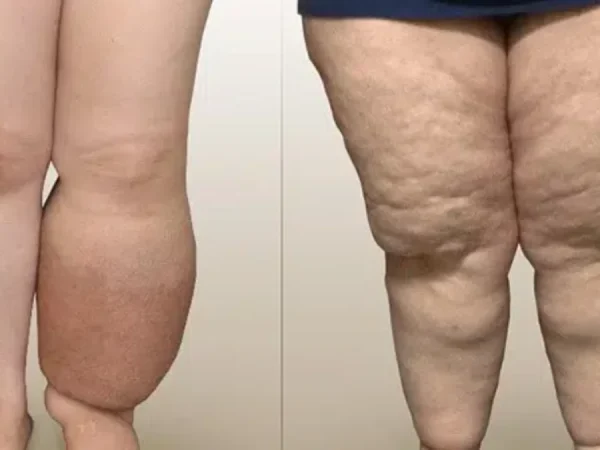
Lipedema can alter the ankle so the calf and ankle merge into one body creating the infamous “cankle” look. That’s when excess subcutaneous fat gathers around the lower leg and stubbornly refuses to budge through typical diet or exercise. Cankles can be fluid, fat or both.
Lipedema cankles are typically bilateral, chronic and accompanied by swelling, tenderness and bruising, which distinguishes them from common weight gain or after-work daintiness that most experience after a prolonged stint on their feet.
1. Anatomical Changes
Lipedema thickens the subcutaneous adipose tissue in the lower legs and around the ankle. The subcutaneous layer is nodular and uneven, adding bulk without impacting the feet, which tend to be narrower. This forms a distinct connection in non-lipedema cases but not in lipedema.
On exam, clinicians may detect palpable fat nodules, a soft but uneven fat cuff around the ankles, and local skin tenderness. These findings distinguish it from simple obesity where fat is more diffusely distributed and the ankle contour is typically maintained.
Fat in lipedema shows a pattern: symmetric buildup from hips to ankles, sparing the toes and feet. This tissue is particularly impervious to conventional weight loss, so a patient can thin out in other places but still retain bulky lower legs. The cankle is the unholy connection where the normal definition between the calf and ankle disappears.
2. Hormonal Influence
Lipedema often starts or worsens with hormonal events such as puberty, pregnancy, or menopause. Women are overwhelmingly affected, which bolsters a hormonal role in disease onset and course.
Hormonal changes cause more fat storage and fluid shifts in the lower body and ankles so the cankle is more pronounced at certain times in our lives. Optimizing hormonal health through medical review can in some patients slow progression and ease symptoms, but it is not a cure.
Addressing hormone-driven factors often accompanies other therapies to address inflammation and pain in addition to diminishing fat deposits.
3. Inflammatory Factors
Chronic low-grade inflammation is believed to fuel lipedema’s progression. Affected limbs often exhibit pain, tenderness, and a propensity to bruise, all signs of friable tissue and local inflammation.
Inflammation can disrupt lymphatic function and encourage water retention, exacerbating swelling and the cankle effect. Lifestyle steps, such as an anti-inflammatory diet, weight management, and gentle activity, assist in minimizing flares and symptom burden.
4. Diagnostic Clues
Important criteria are symmetrical fat distribution, feet sparing and negative Stemmer’s sign. Differentiating lipedema from lymphedema, obesity, or simple edema requires careful history, focused exam and sometimes imaging such as lymphography.
A straightforward checklist of symptoms includes symmetry, pain, easy bruising, ankle cuff, and weight loss resistance. This checklist facilitates early detection and timely management.
Conservative Management
Conservative management attempts to control symptoms, preserve function, and slow progression without surgery. Objectives center around decreasing swelling, increasing mobility, alleviating pain, and avoiding additional fat and fluid accumulation in the legs. These are typically a first-line approach for early-stage disease and those who can’t or will not have surgery.
The key goals of conservative management include:
-
Reduce swelling and fluid buildup
-
Improve mobility and joint function
-
Relieve pain and tenderness
-
Prevent or slow disease progression
-
Maintain skin integrity and reduce infection risk
Compression Therapy
Medical-grade compression garments exert graded pressure that aids lymphatic and venous return. Effective compression decreases limb swelling and can alleviate the ‘cankle’ appearance by preventing fluid from pooling around the ankle and lower leg. Daily wear of good, well-fitting stockings or custom garments is important.
Fit should be checked by a trained fitter, as poor fit reduces benefit and can lead to skin damage. These include flat-knit and circular-knit stockings, adjustable wraps, compression sleeves of the calves and intermittent pneumatic compression pumps at home or in clinic.
Pneumatic pumps can provide supplemental value to manual techniques, as a few pilot studies show increased volume reduction compared to conservative care by itself. Conservative management long-term use must be monitored for skin breakdown, pressure marks, or fungal infection, irritation. Any redness, sores, or numbness should be reported immediately.
Manual Drainage
Manual lymphatic drainage (MLD) is a soft, targeted massage designed to reroute lymph and decrease swelling. MLD is typically included as a component of complex decongestive therapy (CDT), which combines MLD with compression bandaging and exercise to induce more durable reductions in leg volume and comfort.
When compared in clinical trials, CDT has been shown to be effective and in certain patients equally as effective as surgery in controlling symptoms. Find therapists specialized in lymphedema and lipedema for MLD. Sessions differ in their duration and frequency.
Several patients begin with a few sessions a week then taper off. We teach patients easy-to-apply self-massage techniques to perform between visits to promote lymph flow and decrease rebound swelling. Frequent lymphatic drainage typically reduces leg volume, relieves pain, and improves range of motion. Unfortunately, it may not prevent fat accumulation.
Movement Strategies
Low-impact activities enhance blood and lymph circulation and safeguard your joints. Swimming, water aerobics, cycling, and brisk walking are all practical choices that work worldwide and require little equipment. Establish a regimen consisting of 20 to 45 minutes of aerobic work, complemented by twice weekly leg and core strengthening to promote joint alignment.
Avoid extended periods of standing or sitting, and interrupt daytime immobility with short walks or calf pumps. Personalized plans designed with a physiotherapist or exercise specialist can align intensity to fitness, age, and stage of disease.
Conservative care is multidisciplinary. Diet, exercise, compression, and MLD together give the best chance to reduce symptoms and maintain function, though progression can still occur.
Surgical Interventions
Surgical interventions come into play once conservative measures, such as compression, diet, exercise, and decongestive therapy, can no longer manage pain, swelling, or progression. The primary objective is to excise excessive adipose tissue, decrease limb volume, and enhance function.
Surgical options are typically limited to late-stage lipedema and can be used in conjunction with other reconstructive procedures as necessary. While the majority of surgeries are outpatient and patients return home the same day, careful pre-surgical evaluation is necessary to determine whether patients are good candidates and to reduce risks.
Liposuction Techniques
Tumescent liposuction for lipedema involves tumescent injections of dilute local anesthetic and epinephrine injected into tissues, which firms them up and limits bleeding. This technique preserves lymphatic vessels if done by lipedema-specialized surgeons and typically involves less blood loss and faster recovery than previous techniques.
Wet liposuction utilizes less fluid than tumescent and frequently uses general or regional anesthesia. It can eliminate fat but causes more bruising and a bit more blood loss than the tumescent technique.
Dry liposuction, with little or no infiltrate, is basically a thing of the past for lipedema due to the increased risk of bleeding and tissue trauma.
|
Technique |
Pros |
Cons |
|---|---|---|
|
Tumescent |
Low blood loss; better lymphatic preservation; local anesthesia possible |
Longer infiltration time; requires experience |
|
Wet |
Effective fat removal; familiar to many surgeons |
More blood loss than tumescent; more bruising |
|
Dry |
Faster to perform |
Higher bleeding risk; more tissue trauma; not recommended for lipedema |
Others incorporate power-assisted or water-assisted devices to minimize manual power and protect tissue even more. In extreme volume cases, these debulking procedures or lymph node transfer may be combined to treat contour and lymphatic function.
Pre-op evaluation includes medical history, vascular and lymphatic imaging as indicated, and discussion of realistic expectations and risks such as scarring, infection, and nerve injury.
Post-Surgical Care
Compression garments are crucial post-surgery to manage swelling, mold tissues, and decrease the risk of seroma. Patients generally wear graduated compression for weeks to months, paced to healing and comfort.
Wound care and infection monitoring are standard. Pain is controlled with brief courses of medication. Activity is gradually increased with short walks soon after surgery, low-impact exercise within weeks, and full activity after surgeon clearance.
Manual lymphatic drainage and physical therapy assist in moving fluid, reduce fibrosis, and maintain contour long term.
There’s nothing like pain relief after a successful surgery — less swelling, increased mobility and an improved quality of life. The long-term outcomes are often favorable when surgery is combined with ongoing conservative care and lifestyle interventions.
Beyond The Physical
Lipedema is more than a change in appearance and limb shape. It has a psychological and social burden that impacts life, work, and relationships. These physical symptoms, such as out-of-step fat in the legs, “cankle” appearance, tenderness, and easy bruising, often coexist with chronic pain and limited mobility.
All of these converge to influence mood, self-image, and social engagement.
Emotional Impact
It’s frustrating when your symptoms don’t improve despite eating well and exercising. Many of my patients describe self-doubt and anger after a lifetime of trying to bend the shape of their legs through weight loss alone. This can erode motivation and drive them to retreat from activities they previously enjoyed.
Late-stage patients suffer from more depression and isolation. Pain that restricts walking or standing can intensify a feeling of loss. Social stigma surrounding body shape contributes to low self-esteem. There are people with lipedema who never go to parties, the beach, or that romantic dinner because they’re afraid to be ‘looked at’.
This fear can damage relationships and close many avenues of support. When friends and family get it and provide tangible support—painfully listening without trivializing, assisting in wearing clothes, or going to doctor’s appointments—it means the world to the ability to manage and bounce back.
Mental health assistance is a key component of treatment. Body image, grief over a changed body, and coping with chronic pain counseling alleviates depression. Cognitive Behavioral Therapy and group therapy with other chronic pain patients reframe negative thinking and set realistic achievable goals.
Celebrate small wins such as a short walk without flare-up pain, finding a supportive garment, or learning a new pain management technique. These moments lift spirits and generate momentum.
Social Challenges
These are social participation barriers that are both practical and psychological. Mobility restrictions cause congestion distress. Clothes are limited and we’re too scared of what other people think to leave our house.
Workplace challenges are real: jobs requiring long standing or prolonged sitting without leg elevation worsen swelling and pain. The absence of accommodations or workplace understanding contributes to stress and can destabilize careers.
Tangible actions keep social life and work afloat. Compression stockings and short, scheduled 5-10 minute breaks to elevate legs can alleviate swelling during a workday. Mobility aids, whether that’s a small folding stool or hiking poles, assist with travel and events.
Community groups, online forums, local support meetups, and disease-specific organizations provide shared experience, practical advice, and emotional support, combating isolation and increasing treatment literacy.
-
Limited mobility that reduces participation in events and travel.
-
How hard it was to find something that fit both of those criteria!
-
Social isolation due to fear of judgment.
-
Workplace environments that lack breaks, seating, or flexible roles.
-
Medical dismissal or medical misdiagnosis causes emotional distress and loss of trust.
Future Outlook
Lipedema research is growing and that matters for anyone who glimpses a cankle and craves clarity. Bridging knowledge gaps in lipedema pathogenesis will render future care more precise and useful. Scientists are investigating genes, immune signals, and the evolution of fat and blood vessels in affected limbs. Over half of lipedema primary studies were published in the past five years, indicating growing interest and providing hope for accelerated advancement.
Because lipedema cannot currently be cured, which is a significant worldwide issue, research focuses on both halting or decelerating progression and alleviating symptoms. Probably genetics and environment both play a role. We don’t know the specific risk factors. Continuing genetics research might identify inherited patterns or mutations that increase risk.
Once researchers identify genetic signals, they can develop tests to identify at-risk individuals earlier. Work on inflammatory pathways is central at the same time. Chronic inflammation is a hallmark of lipedema, but which pathways are driving fat growth, immune cell responses, and new-vessel formation is unsettled. Pinpointing those paths could lead to drugs targeting inflammation and angiogenesis instead of just dealing with volume by surgery or compression.
Diagnostics ought to get better. Improved imaging, standardized clinical criteria, and blood or tissue biomarkers might enable clinicians to stage disease more consistently and monitor response to treatment. That will allow for more customized treatment regimens that fit each individual’s disease stage and biology.
For instance, a patient with early-stage disease and robust inflammatory markers may initially respond well to anti-inflammatory medication and lifestyle interventions, whereas a patient with later-stage fibrotic tissue would likely require liposuction alongside rehabilitation and skin care. Prevention and self-care is still key. Promoting healthy lifestyles with balanced diets and exercise can address symptoms and potentially decelerate cankle growth when lipedema exists.
On the practical side, low-impact aerobic activity, resistance work to maintain muscle, and focus on protein and anti-inflammatory nutrients are important. Personalized plans are critical as tolerance differs. A multimodal approach that incorporates psychosocial support, education, and family planning helps individuals live well with lipedema.
Patient education aligns expectations with current management goals: relieve symptoms, improve function, slow progression, and prevent secondary problems. Support and advocacy networks will expand, enhancing care accessibility and research involvement. With increased awareness worldwide, clinicians, payers, and patients could collaborate to broaden services and trials, facilitating the testing of new diagnostics and therapies.
Conclusion
Lipedema can lurk behind a cankle look and lead to some legit daily restrictions. Symptoms are very clear: symmetric fat pad buildup on the lower leg, easy bruising, and pain. Basic care measures, such as compression, exercise, and weight bearing usually reduce edema and pain. Liposuction extracts superfluous fat and can alter the contour of the legs. Mind and body do as well. Stress, sleep, and social support sculpt recovery and mood.
For a plan, consult with a clinician familiar with lipedema. Inquire about long-term steps, risks, and what to anticipate post-surgery. Monitor symptoms with photos and notes. Attempt minor lifestyle modifications initially, then supplement with medical measures if required.
Find out why. Book a consult or join a local support group to discover what to do next.
Frequently Asked Questions
What is lipedema and how does it differ from regular fat or lymphedema?
Lipedema is a long-term condition of subcutaneous fat that results in bilateral swelling of the legs and occasionally the arms. It differs from regular fat by painful, disproportional fat deposits and from lymphedema by preserved feet in the early stages and a soft, nodular feel rather than firm tissue, with a positive Stemmer sign.
Can lipedema cause the “cankle” appearance?
Yes. Lipedema cankle – Lipedema can produce a cankle appearance by depositing extra fat in the lower calf and ankle area, obscuring the normal ankle definition and causing the lower leg to resemble a thick, fat column.
What conservative treatments help reduce cankle appearance from lipedema?
Compression garments, manual lymphatic drainage, targeted exercise, weight management, and an anti-inflammatory diet can reduce swelling and discomfort. These steps enhance functionality and ease but rarely eliminate the abnormal fat by themselves.
When is surgery considered for lipedema-related cankles?
Surgery, usually lipedema-specialized liposuction (water-assisted or tumescent), is offered when conservative care does not control symptoms, pain, mobility issues, or aesthetic concerns of significant severity. Choose surgeons who specialize in lipedema treatment.
Will liposuction permanently fix the cankle appearance from lipedema?
When performed properly, liposuction can dramatically and maintainably reduce fat volume and shape successfully. Continued attention with compression, healthy choices, and maintenance visits are a must to preserve results and prevent relapse.
Are there risks or complications with lipedema surgery?
Yes. Risks include infection, bleeding, contour irregularities, numbness, and incomplete symptom relief. Choosing a skilled surgeon and adhering to after-care guidelines minimizes complications and enhances results.
How can I find a qualified specialist for lipedema diagnosis and treatment?
Find providers with lipedema-specific training, certification in lymphology or vascular surgery, patient reviews, and experience with lipedema liposuction. Inquire further about multidisciplinary care, imaging, and long-term follow-up.