

Key Takeaways
-
How many surgeries to treat lipedema depends on disease stage, treated body areas, patient health, and total fats. Schedule a customized evaluation with an expert.
-
Most patients require multiple staged liposuction sessions, not just one operation to stay in a safe removal range and allow for optimal healing.
-
Lymphatic-sparing liposuction is the favorite technique, and surgeon experience impacts both the amount of sessions required and the complication risk.
-
Ready for holistic care — surgery with pre- and post-op therapies, compression, and lifestyle measures to enhance results and limit relapse.
-
Get healthier before surgery. Control your comorbidities, listen to your therapists, and do your pre-surgical lymphatic prep to hopefully minimize the amount of procedures you end up needing.
-
Talk about realistic goals with a multidisciplinary team so that surgical planning reflects your symptoms, functional needs, and long-term disease control.
How many surgeries to treat lipedema varies by disease stage, body regions involved, and objectives.
Surgeons typically schedule several operations, usually ranging from two to six procedures, with months between each to let swelling subside and mobility increase. Each session usually focuses on distinct areas, like thighs, calves, or arms, and employs tumescent liposuction or lymph-sparing methods.
Expected recovery and overall results differ, too, which is why personalized plans help determine the number and timing of surgeries.
Understanding Lipedema
Lipedema is a chronic, progressive disorder characterized by abnormal fat accumulation, primarily in the legs, hips, thighs, and occasionally arms. Lipedema fat, on the other hand, is dense and fibrotic, often painful, and resistant to diet and exercise. Early diagnosis matters; identifying lipedema sooner helps control symptoms, slow progression, and guide treatment choices.
The disease changes body shape, restricts movement, and diminishes quality of life through pain, inactivity, and anxiety.
The Condition
Lipedema leads to disproportionate fat deposition and swelling that is distinct from common obesity or typical weight gain. It is typically symmetric and spares the feet, which provides a clinical clue. Lipedema fat may be tender to touch and bruises easily.
Untreated lipedema can result in secondary lymphedema over time, meaning lymph fluid collects and swelling intensifies. Hormonal shifts, low-grade inflammation, and lymphatic dysfunction are associated with lipedema. Many patients notice onset or worsening during puberty, pregnancy, or menopause, indicating a hormonal component.
Genetics are involved; family history is common. Due to symptom overlap with obesity, many physicians miss lipedema. Not all doctors doing liposuction will have training in lipedema-specific liposuction techniques, which is why it matters to find specialists.
The Stages
-
Stage I: Skin is smooth, fat feels consistent, nodules are not palpable, with the barest of functional constraints.
-
Stage II: Skin surface becomes uneven, big fat nodules and thickening, increased pain and easy bruising.
-
Stage III: Large deformations and lobules form, especially on thighs and buttocks. Mobility is impaired and the skin is taut.
-
Stage IV: Lipolymphedema—combined lipedema and lymphedema with significant fluid retention, fibrosis, and higher complication risk.
Late stages demonstrate fibrotic fat, skin alterations, and an increased incidence of complications such as infections or decreased venous return. Progression alters what treatments will work and how surgery is planned.
Staging is based on clinical exam, body composition measures, and symptom severity, not imaging alone.
The Symptoms
-
Symmetric enlargement of the legs and hips with sparing of the feet.
-
Pain, tenderness, and easy bruising of affected areas.
-
Top-resistant fat that is firm or nodular to the touch.
-
Progressive swelling that worsens over time without treatment.
-
Muscle weakness, joint pain, and reduced mobility.
-
Emotional distress, low self-image, and social withdrawal.
Symptoms extend beyond typical weight gain and can hinder daily activities such as walking, taking the stairs, or standing for extended periods. Venous interventions do not address lipedema.
Surgical options, particularly lipedema-aware liposuction, can help reduce pain and improve function. Holistic treatment might include manual lymphatic drainage, compression, and supportive therapies like hyperbaric oxygen. Bariatric surgery might reduce weight, but lipedema tissue is less affected.
Surgical Count Factors
There are a few factors that determine how many surgeries a lipedema sufferer will need. A comprehensive evaluation from a specialist establishes your planning baseline. Staging, areas involved, health, fat volume and surgical approach all inform the surgical count and timings.
1. Disease Stage
Early-stage lipedema requires fewer or less extensive surgeries because fat is softer and less fibrotic. Stage 3 disease tends to have larger deposits and more fibrotic tissue, so stage 3 women often need more than one session to reach safe aspirate limits and achieve good contour.
Advanced disease with secondary lymphedema or dense fibrosis makes the surgery more complex. Surgeries take longer and recovery can be slower. This kind of accuracy in staging guides how much to remove per session and the order of areas treated, medical professionals explained, which in turn helps limit complications.
2. Body Area
When several areas are involved, such as inner and outer thighs, hips, buttocks, arms, and calves, the surgical count increases. More or larger treatment areas cause surgeons to divide treatment into multiple sessions in order to remain below safe thresholds, such as the 5L aspirate limit in an accredited center.
Certain zones, like inner knees or calves, are done separately because they require more detailed work and can swell more. Complete treatment of all areas in a single session is seldom possible. The most prudent plans spread procedures over two to four sessions depending on severity.
3. Patient Health
General health and comorbidities influence candidacy and timing. Higher BMI, uncontrolled diabetes or arthritis may bump surgeries into staged procedures and fix medical risks first.
Poor lymphatic health increases complication risk and might necessitate conservative fat extraction each session. Optimizing your health pre-surgery—weight control, smoking cessation, physical therapy—lowers your risks and can minimize the overall interventions required.
4. Fat Volume
Safe aspirate limits, typically five liters per accredited session, mean that large deposits require multiple liposuction sessions. Some large volume patients will have two to four sessions; others may need more if tissue is very fibrotic.
Staged reductions permit control of operative edema and improved healing while progressing toward contour and symptom relief.
5. Surgical Technique
Various strategies alter how much can be accomplished at once. Tumescent liposuction, water-assisted and ultrasound-assisted methods may be used.
VASER or PowerLipo can assist with highly fibrotic tissue. Lymphatic-sparing approaches are favored to preserve lymph vessels and minimize lymphedema risk. Excisional skin removal may follow liposuction when there is excess skin.
Surgical count factors also affect the number of sessions and final results, including surgeon experience and preferred technique.
Surgical Approaches
Surgical options for lipedema focus on minimizing surplus fat, contouring limbs, and diminishing discomfort or immobility. Decisions are contingent upon stage of disease, skin laxity, patient health, and objectives.
Summary below a concise table of main surgical options, followed by more detail on liposuction types and excisional procedures.
|
Surgical Option |
Purpose |
Notable details |
|---|---|---|
|
Liposuction (general) |
Remove lipedema fat, reduce pain and size |
Considered gold standard; various methods exist with different tissue effects |
|
Tumescent liposuction |
Fat removal with local fluid injection |
High safety profile, useful for large areas, often lymph-sparing when done carefully |
|
Water-assisted liposuction (WAL) |
Gentle fat dislodgement using water jet |
Good for fine contouring, may reduce trauma and speed recovery |
|
VASER (ultrasound) |
Breaks up fat before suction |
Useful for fibrotic fat but risks thermal injury if misused |
|
Power-assisted liposuction (PAL) |
Mechanical cannula movement helps suction |
Efficient for dense tissue, reduces surgeon fatigue |
|
Excisional surgery (lipectomy) |
Remove redundant skin and fibrotic tissue |
Best for advanced cases with severe laxity; may be staged with liposuction |
|
Combination approaches |
Address both fat and skin |
Often yields best functional and aesthetic outcomes |
Liposuction Types
Tumescent, water-assisted, VASER, and power-assisted are typical for lipedema. Tumescent uses dilute local anesthetic and saline to swell tissue, facilitating fat removal and minimizing blood loss.
Water-assisted liposuction employs a mild water jet to dislodge fat and patients experience less bruising. VASER uses ultrasound to emulsify fibrotic fat, which can be useful in areas of dense tissue and must be carefully controlled to prevent thermal injury.
Power-assisted employs a vibrating cannula to slice through fibrous tissue with less applied pressure.
Lymphatic-sparing approaches are important. Even surgeons trained in lipedema usually use small cannulas, shallow passes, and targeted planes to protect lymph collectors.
Lymphatic preservation decreases the incidence of de novo or aggravated lymphedema and enhances long-term outcomes.
AWAKE LIPOSUCTION – TUMESCENT – for many. General anesthesia can be selected for larger, combined procedures or for patient comfort.
Method choice affects recovery: less invasive techniques usually mean quicker return to activity, whereas aggressive or hybrid approaches may require extended recovery and increased surveillance.
Excisional Procedures
Excisional methods excise excess skin and fibrotic fat following significant volume reduction or in cases of non-retractile skin. Skin excision or lipectomy is common in advanced lipedema where folds impair hygiene or function.
For example, thigh lifts, brachioplasty, or lower body lifts for those regions involved. Excision is frequently combined with liposuction to better refine shape and restore function, with a staged plan to help control healing and mitigate complications.
Risks differ from liposuction. Wound breakdown, scarring, and longer recovery are more likely, so careful preoperative planning and realistic expectations are important.
The Specialist Team
A dedicated lipedema specialist team combines clinicians from surgery, medicine, and rehabilitation to formulate an individualized care plan for each patient. They differ by center but typically consist of lipedema-trained surgeons, physicians who manage medical risks and comorbidities, and certified therapists who oversee lymphatic care and rehab. Together, we help establish goals for symptom relief, function, and appearance and decrease the likelihood of missed diagnoses or cookie-cutter care.
Surgeon’s Role
The surgeon spearheads the surgical plan and conducts lipedema reduction procedures, in many cases employing modified liposuction techniques that prioritize lymphatic sparing. A specialist lipedema surgeon selects the appropriate technique, such as tumescent, water-assisted, or power-assisted, according to tissue type, stage of disease, and patient goals.
Surgeons manage intraoperative safety, including fluid balance, blood loss, and limb positioning to lower the risk of complications. They collaborate with anesthesiologists, nurses, and therapists pre and post-op in order to time compression garments, drains if used, and staged procedures when large areas need multiple sessions.
Surgical expertise leads to fewer complications, better contour, and improved symptoms.
Physician’s Role
Endocrinologists, obesity medicine specialists, or general internists, for example, evaluate medical readiness and address the underlying medical conditions that prevent or optimize wound healing and recovery. They check thyroid, metabolic and cardiovascular status and manage comorbidities such as arthritis or venous disease that can impact surgical risk and rehab.
Physicians oversee medical optimization pre-op and in follow-up, modify medications, and coordinate consults. Their involvement determines if a patient should postpone surgery for weight loss, endocrinology workup, or treatment of other conditions.
They help address chronic issues that surgery will not resolve on its own.
Therapist’s Role
Specialist Team Certified lipedema therapists offer manual lymphatic drainage, compression garment fitting and training, and rehab plans that aid recovery. They instruct soft tissue exercises, scar care, and at-home lymphatic care rituals to keep fluid flowing and pain at bay.
They customize prehab and post-rehab plans. Therapists teach patients about self-care and expectations and help address swelling, fibrosis, and mobility restrictions with both manual work and pneumatic devices when indicated.
Their role facilitates healing, reduces pain, and enhances lymphatic flow. Numerous patients report that regular therapy makes all the difference, particularly when local providers previously discounted their symptoms.
Single vs. Staged
Single vs. Staged – lipedema surgery can be performed in a single session or broken up into stages. The option is contingent upon disease severity, treatment location, and the individual’s general health. For the majority of patients, staged surgeries are necessary to optimize safety and the desired outcome.
Large volume removal in a single procedure increases risk and reduces healing speed. Staged work allows surgeons to eliminate fat in multiple passes and gives tissues time to rest between sessions, which often results in superior long-term outcomes.
The Single Procedure
Single vs. Staged – one procedure targets a small area or early-stage lipedema in a surgical session. This is for carefully selected patients with small volume disease and good health, not the majority. Single-session can offer faster short-term recovery and may show visible change within three to six months, with patients frequently resuming life as usual after the initial seven days.
If several areas are impacted, there’s little room for improvement. Patient selection needs strict criteria: low body-wide fat volume, minimal fibrosis, clear expectations, and no major medical risks. Since the price for one procedure alone is usually upward of 15,640 USD, budgeting is a factor for choosing.
When it comes to more fibrotic or stubborn tissue, single sessions very rarely do the trick unless an aggressive device like PowerLipo or VaserLipo is deployed, which come with their own trade-offs in complexity and recovery.
The Staged Approach
Staged approaches divide treatment into two, three, or more operations separated by months or years. The majority of women will require one to four procedures, two being typical. Staging decreases surgical risk by minimizing the volume excised per session and decreasing each procedure’s operative time.
This minimizes fluid shifts and blood loss and allows the body to recover between sessions. Recovery between stages is usually three to twelve weeks, with most programs prescribing four to six weeks of decompressive therapy incorporating medical-grade compression, lymph-press, and manual lymphatic massage. They aid lymphatic flow and tissue remodeling.
Staged surgery enhances results for severe or advanced lipedema and typically provides superior symptom alleviation, such as notable pain reduction. Results can be sustained over a five-year average and our studies demonstrate gains at four years persisting to twelve years.
Staging allows adaptation of technique: surgeons can use gentler suction in early sessions and reserve PowerLipo or VaserLipo for tough, fibrotic areas later. Planning distributes cost over time and aids patients in coping with downtime and therapy requirements.
Holistic Management
Holistic management for lipedema incorporates both surgical and non-surgical therapies to manage tissue volume, pain, and function. This holistic approach combines procedures such as liposuction with conservative care, including manual lymphatic drainage, compression, nutrition, and physical therapy to optimize results and prevent recurrence. By incorporating these factors, it is possible to manage symptoms in the long term and recover better from surgery.
Pre-Surgical Care
-
Complete clinical and imaging assessment to stage disease, map fat distribution, and check vascular or lymphatic function.
-
Optimize medical comorbidities: manage hypertension, diabetes, and clotting risks with primary care or specialists.
-
Manual lymphatic drainage (MLD) and short-term compression minimize preoperative edema and decrease intraoperative fluid shifts.
-
Prehab PT strengthens core and limb musculature, improves range of motion, and educates on safe movement patterns.
-
Anti-inflammatory and wound healing protein nutritional counseling and weight-stable strategies when weight loss is not realistic.
-
Smoke and substance review to reduce surgical risk and accelerate healing.
-
Pre-op imaging or lymphoscintigraphy is used if lymph function is unclear to plan less disruptive surgical approaches.
-
Psychological evaluation and counseling regarding expectations, recovery, scar management and potential need for staged procedures.
-
Custom plan according to stage, spread, and patient health. Shared decision making regarding timing and extent of surgery.
Conditioning the lymphatic system diminishes operative edema, minimizes the risk of seromas and optimizes tissue perfusion. Patient education and psychological support decrease patient anxiety, improve compliance to compression and rehab, and result in improved patient satisfaction. Personalized pre-hab plans are important since early stage disease requires different preparation than late stage mixed lymphedema-lipedema presentations.
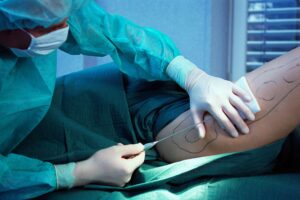
Post-Surgical Care
-
Checklist for immediate and long-term recovery:
-
Monitor vital signs, wound sites, and drainage output in first 48 to 72 hours.
-
Early gentle mobilization reduces thrombotic risk and boosts circulation.
-
Graduated compression garments fitted within days control swelling and shape tissues.
-
Scheduled MLD starts when surgeon approves, often within 1 to 2 weeks.
-
Pain control plan uses multimodal analgesia to limit opioid need.
-
Nutrition plan emphasizes protein, vitamins, and anti-inflammatory choices to support healing.
-
Follow-up imaging or clinical checks detect hematoma, infection, or delayed lymphatic injury.
-
Rehabilitation program includes progressive strength and low-impact cardio.
-
Long-term maintenance visits occur every 3 to 12 months to assess recurrence and adjust care.
-
By closely following healing, swelling, and complications, quick intervention can be taken for infection or lymph leak. Post-op care balances rest with staged activity increases to prevent stiffness and encourage function. Continued specialist team support, including the surgeon, lymphologist, physiotherapist, dietician, and mental health professional, bolsters recovery and maintains surgical gains.
Conclusion
Surgery for lipedema usually requires more than one. Small, concentrated regions can recover in one operation. Extensive areas usually require staged surgeries. Surgeons select the treatment approach depending on the region of the body, stage of the disease, general health, and objectives. Local tumescent liposuction works wonders for many. Water-assisted or PAL methods reduce trauma and accelerate recovery. A multidisciplinary team including a surgeon, therapist, and nurse gives the best results. Pair surgery with compression, exercise, and skin care for longer relief. Anticipate a definitive treatment roadmap, established convalescence procedures, and reasonable time estimates from your squad. Chat with a specialist to receive a customized count and schedule that suits your specific needs and lifestyle.
Frequently Asked Questions
How many surgeries are typically needed to treat lipedema?
Most patients require more than one. Several patients need two to six surgeries based on disease stage, affected regions, and objectives. Your surgeon will develop an individualized plan.
Can one surgery treat all affected areas?
Rarely. Doing all areas in one operation is too risky and causes too much swelling. Surgeons typically stage procedures over a few months for safety and improved recovery.
What factors determine the number of surgeries?
Stage of lipedema, number and size of areas, skin laxity, overall health and lymphatic risk all dictate surgical count. Each impacts how much tissue can be safely removed per session.
Is liposuction the only surgical option?
No. Tumescent liposuction (water-assisted or power-assisted) is most common. In advanced stages, additional skin removal (excision) may be required to enhance contour and functionality.
How long is recovery between staged surgeries?
You’ll need 4 to 12 weeks to recover before moving on to the next. Time varies based on healing, reduced swelling, and the surgeon’s judgment of lymphatic safety.
Will multiple surgeries improve mobility and pain?
Yes. These properly staged surgeries often reduce pain, improve mobility, and enhance activities of daily living. Outcomes rely on realistic expectations and continued conservative care.
How do I find a qualified surgeon for lipedema?
Seek out surgeons who are familiar with lipedema and lymphatic-safe liposuction. Verify credentials, patient results and multidisciplinary care. Find second opinions and patient references.